School Value of Respect
In the Junior School, respect is one of our core values and guides how we learn, work and interact with one another each day. Respect helps create a positive, safe and supportive environment where everyone feels valued and ready to succeed.
A simple way students can demonstrate respect is through the way they wear their school uniform. Wearing the uniform correctly shows pride in the school and a commitment to being part of the school community. Students are expected to arrive neatly presented, with shirts tucked in, their uniform worn correctly and ready for learning.
Respect is also demonstrated in many other ways across the school. Students show respect when they:
• listen carefully when others are speaking.
• show kindness towards their classmates.
• follow instructions from teachers and staff.
• take care of school property and learning spaces.
• arrive to class prepared and ready to learn.
Show respect for the school environment by caring for the gardens, placing rubbish in bins, staying on the pathways and avoiding walking through our beautiful garden beds.
By practising respect in these ways, students help build a school culture. Together, through these everyday actions, we strengthen our community and support a positive environment for learning.
Please Label All Student Items
To help ensure that misplaced belongings can be quickly returned to their owners, we kindly ask all parents to clearly label all student items. This includes lunch boxes, drink bottles, hats, jackets, jumpers, and any other personal belongings brought to school.
When items are clearly labelled with a child’s name, it allows staff to easily identify the owner if the item becomes misplaced or is found around the school. Unfortunately, many items that are not labelled are difficult to return and often remain unclaimed in lost property.
Taking a few moments to label your child’s belongings can make a big difference in helping us reunite students with their items and reducing the amount of lost property at school.
Thank you for your support and cooperation.
Melanie Morton – Assistant Principal: Head of Junior School (Maddingley)
Sally Savic – Assistant Principal: Head of Junior School (Woodlea)
Reading at Home
All Junior School classes have established a home reading routine and are sending home a range of reading material.
To become skilled and proficient readers, children need to be exposed to different texts to develop the various skills in Word Recognition and Language Comprehension. Therefore, reading at home should include reading a range of materials to support and develop these skills.
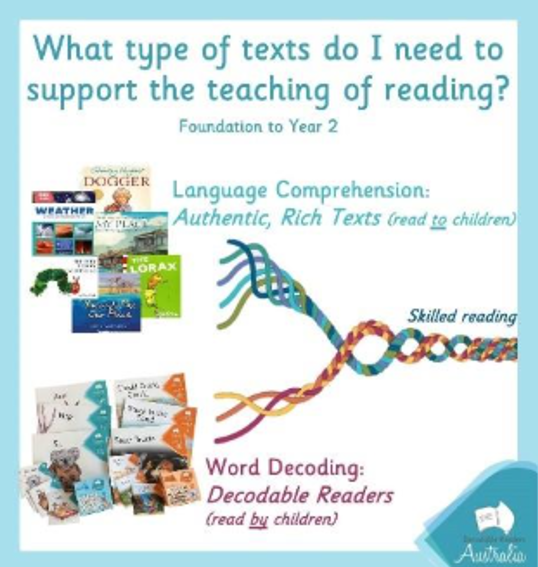
Reading to Build Skills in Word Recognition
Reading at home should include books and words your child can read independently. In the early stages, children are learning letters and sounds and how letters represent those sounds. Nightly reading involves practising these letters and sounds regularly to help build confidence and accuracy.
As your child becomes more confident, they will begin reading single words, then short phrases and sentences. It is important that they continue revising previously learnt sounds and words each night.
Once your child has a strong understanding of letter–sound relationships, they will read decodable books. These books are carefully chosen to match what your child has been taught, allowing them to practise blending sounds to read words independently. Reading each decodable book several times helps build fluency and automaticity.
Decodable texts are designed to support your child in developing strong word reading skills so they can confidently move on to enjoying a wide range of quality literature.
Reading to Build Language Comprehension
Quality literature, including rich and authentic texts, helps children build their vocabulary, background knowledge, sentence understanding and comprehension skills. These books may be selected by your child’s teacher or chosen from the classroom library.
While your child is still learning letter–sound relationships and developing their decoding skills, these books should be read aloud to them. Listening to complex stories supports language development and understanding, even before they can read them independently.
Once your child can confidently decode a wide range of words, including more complex spelling patterns, they can begin reading these books on their own.
Reading quality literature, whether independently or being read to, helps foster a love of reading and supports overall literacy development.
Talking about Reading
A key part of developing strong reading skills is having rich discussions about books. Talking with your child about what they are reading helps build their understanding, vocabulary and overall comprehension.
Ask your child questions about the text, including ones that require them to recall information directly from the story. You can also discuss new or interesting words, talk about their meanings and encourage your child to explain their thinking. These conversations help deepen understanding and strengthen language skills.
Ashleigh Durham – Deputy Head of Junior School (Maddingley)
Aimee La Franchi – Deputy Head of Junior School (Woodlea)
Maddingley
Prep Reception Welcomes Our School Captains
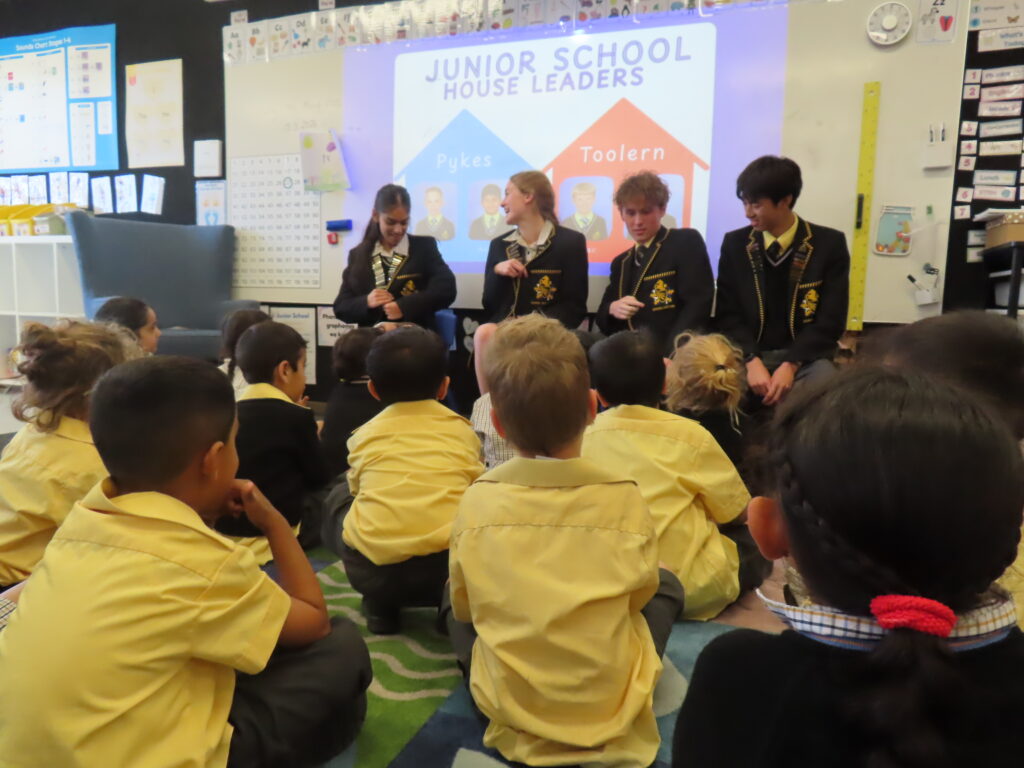
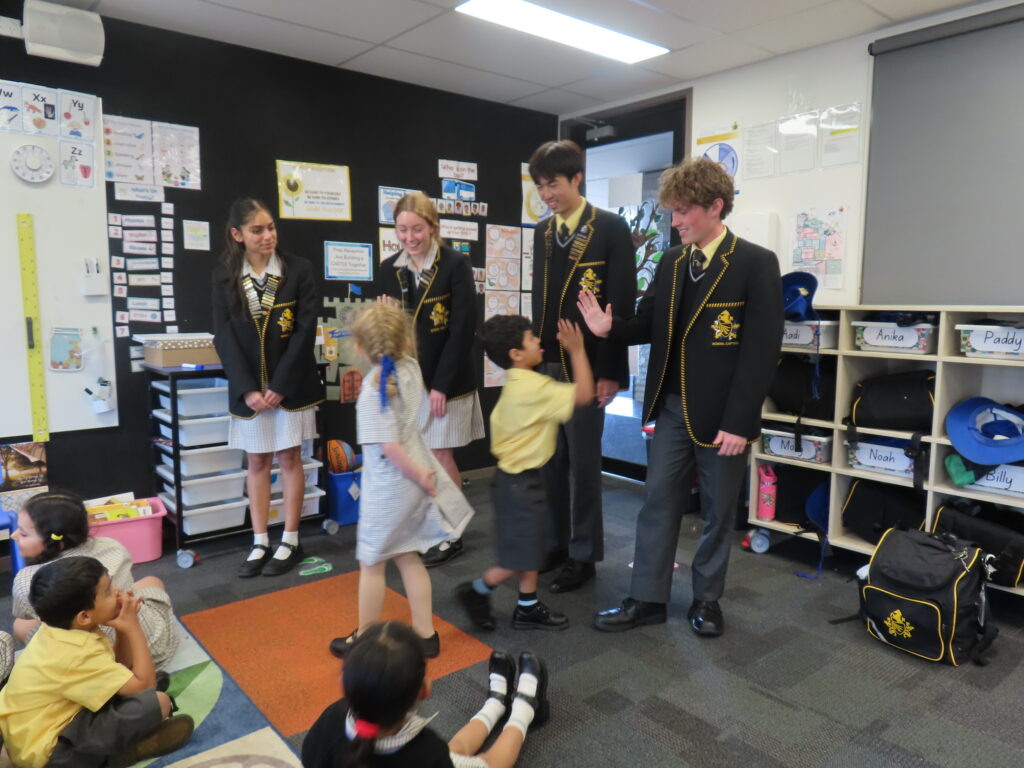
As part of our Family and Community unit, our Prep Reception students recently welcomed the School Captains into their classroom. Throughout this unit, students have been meeting members of the school community and learning about the important roles they play in helping our school thrive. These visits help our youngest learners build a strong sense of belonging and confidence as they begin their learning journey.
We extend our sincere thanks to Micah, Connie, Kieran and Mekah for spending time with the class. The captains proudly showed their badges and blazers, helped students practise spelling their names, and spoke about their responsibilities, aspirations and our school values.
The Prep Reception students discovered that the student who finishes at the top of their grade is called the dux. The children were delighted to realise this sounds just like “ducks” — and many are now very keen to be “ducks” one day!
We are fortunate at BMG to have such outstanding student leaders. Our School Captains demonstrated kindness, confidence and pride in their school, and our Prep Reception students loved learning from them. Next, the class is looking forward to visiting the Maddingley School Café as they continue building connections within the Bacchus Marsh Grammar community.
Karlisa Smy – Prep Reception Teacher
Maddingley Prep Goes to Staughton Vale
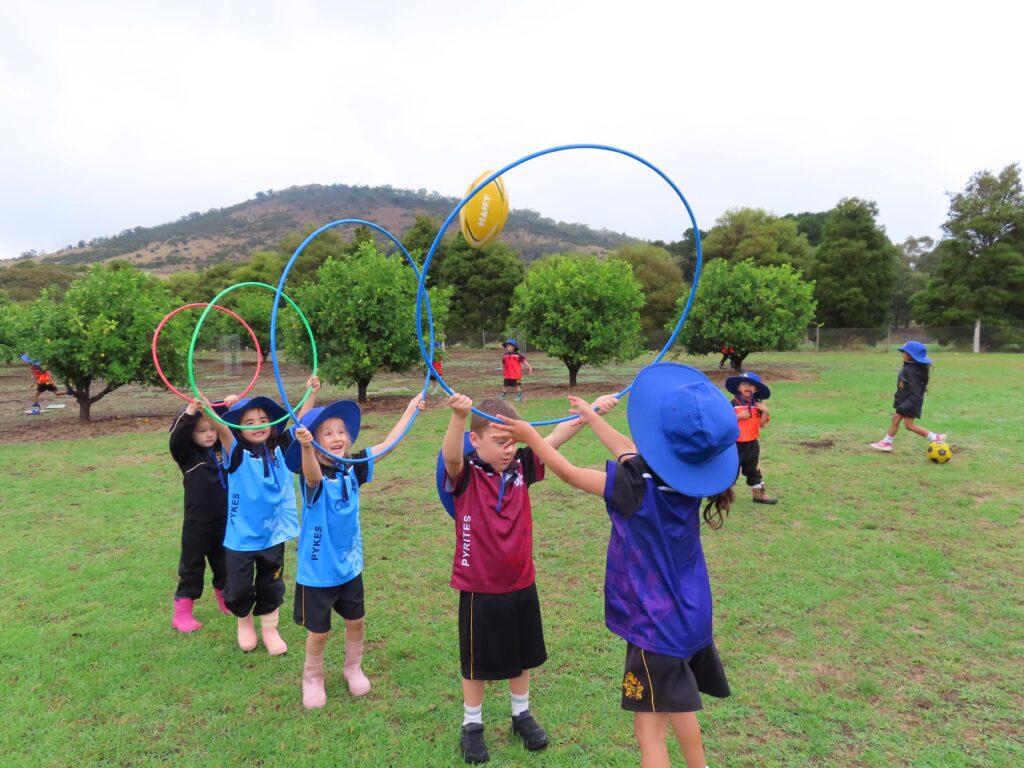
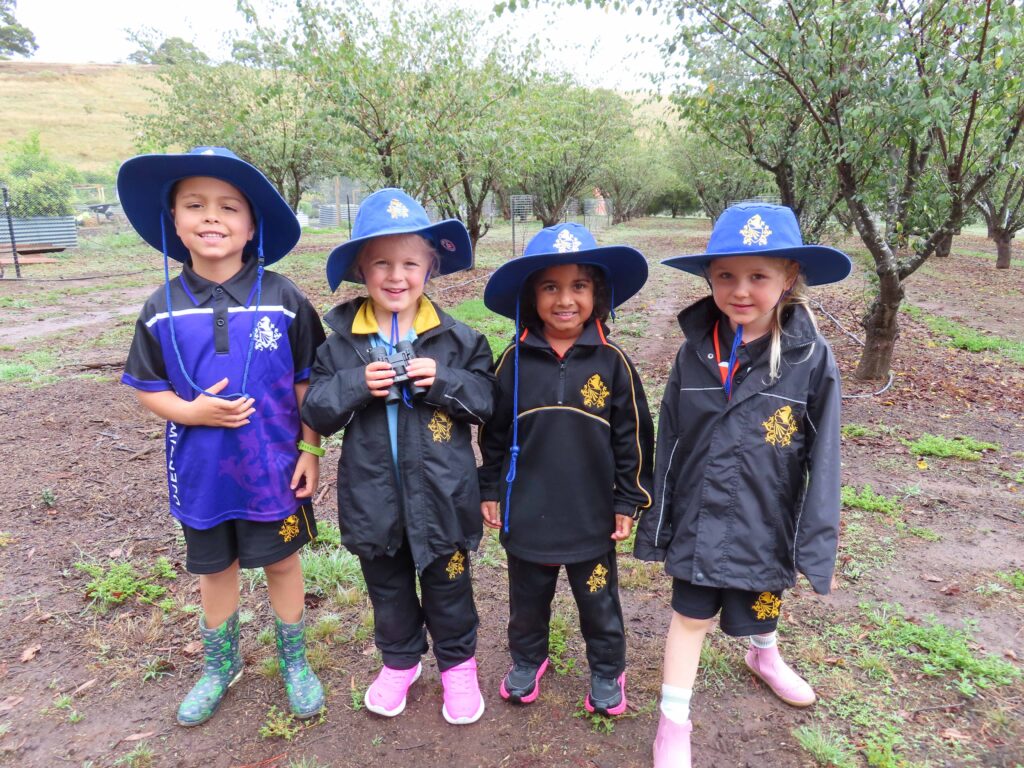
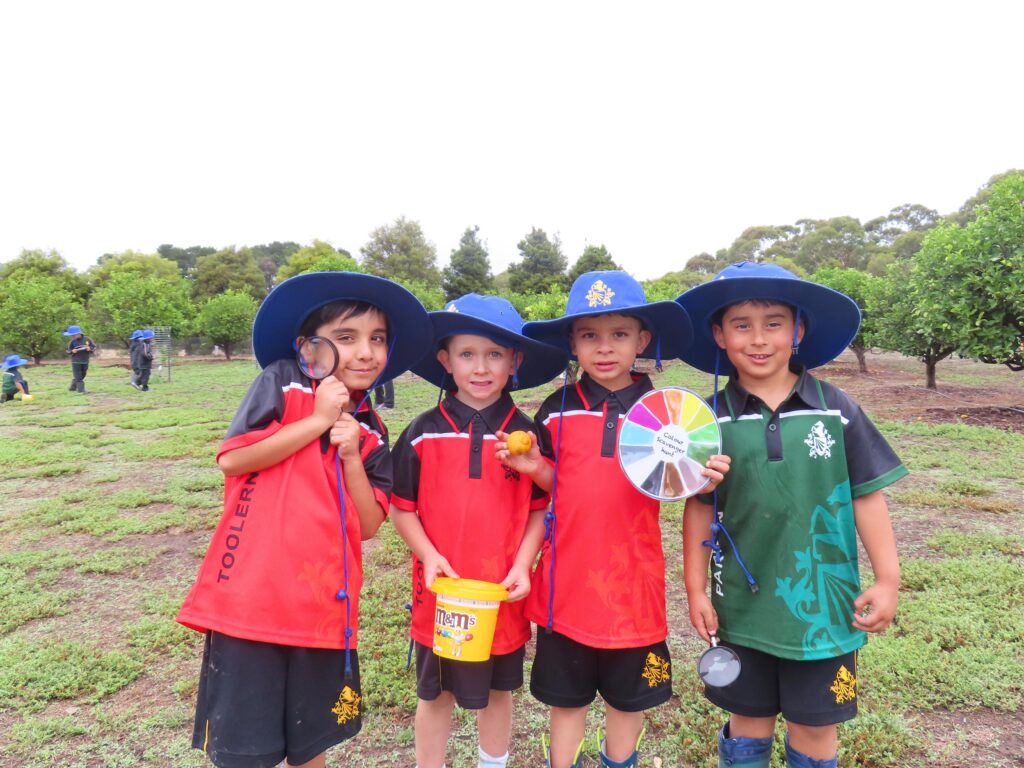
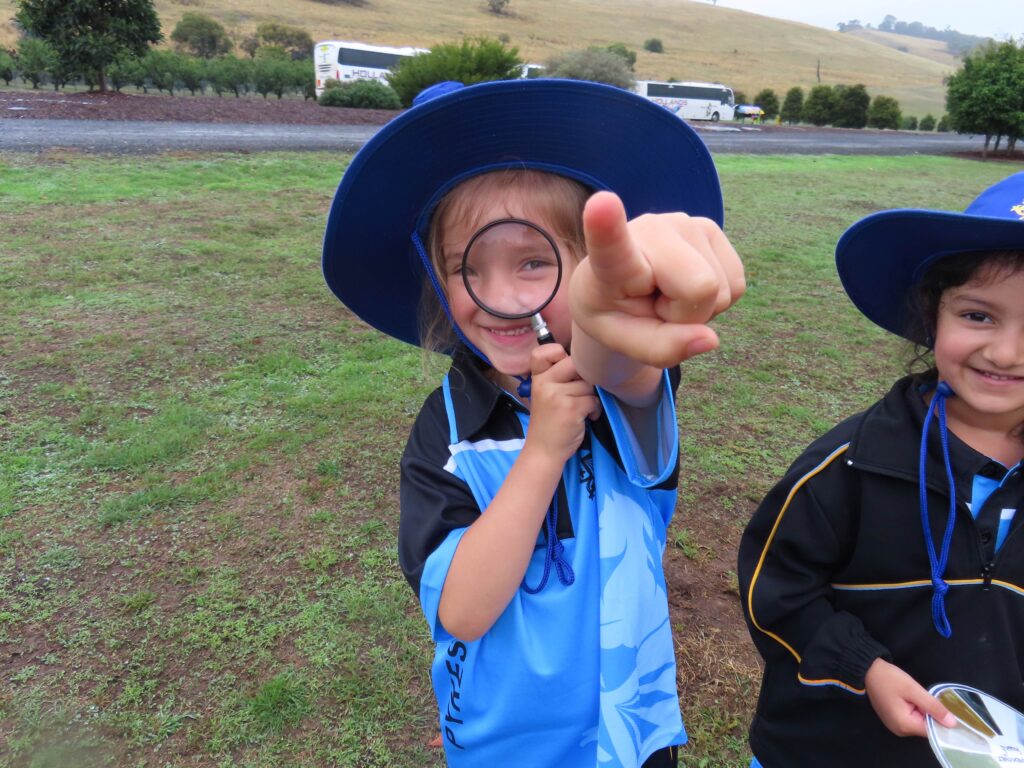
It might have been a little wet and a whole lot muddy, but what a great day out for our first Staughton Vale adventure for the Maddingley Preps. The day provided a fantastic opportunity for students to explore, discover and connect with the natural environment.
One of the highlights was bird watching, with students observing and identifying a variety of local bird species. This activity encouraged careful listening and observation, with a highlight seeing a flock of pelicans fly over us.
Students also participated in a scavenger hunt, working collaboratively to collect all the colours we could find in our natural surroundings.
The students had a great time weaving with Mrs Cassar, creating some fantastic woollen craft to take home with them as a great keepsake from the day.
During lunch play, students made the most of the open space and sports equipment, enjoying active play with their friend.
A big thank you to Ms Stacey-Missen and all the staff who made our experience so much fun in a beautiful outdoor setting.
Kylie McKerrow – Head of Year: Prep (Maddingley)
Junior Art at Maddingley
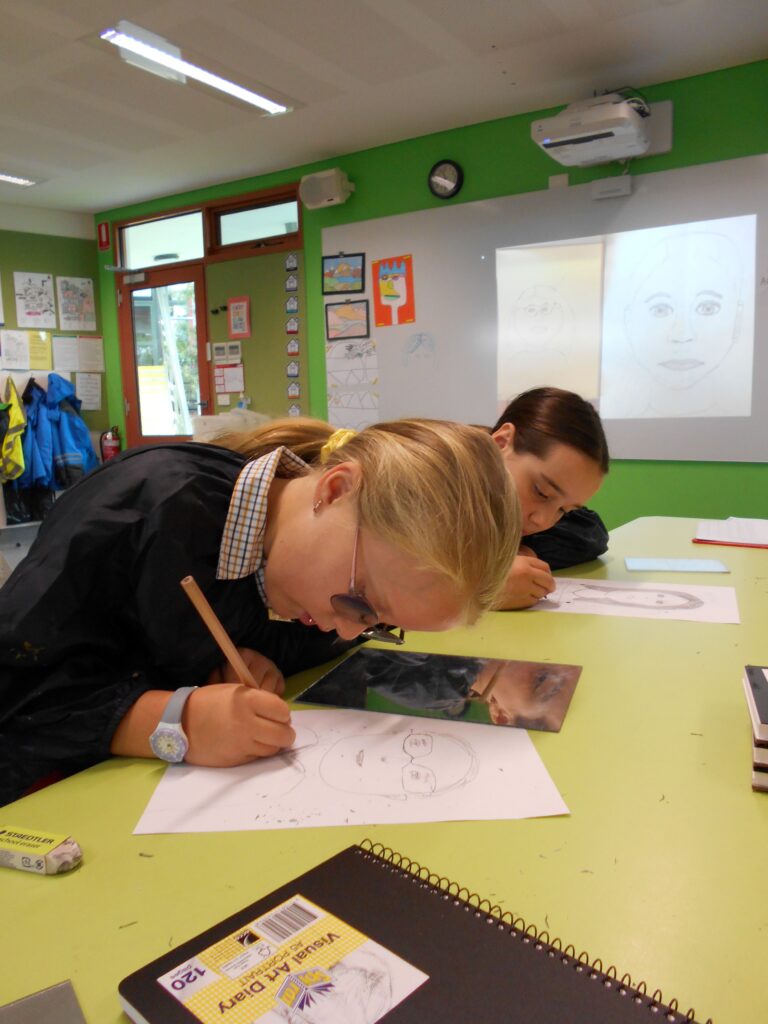
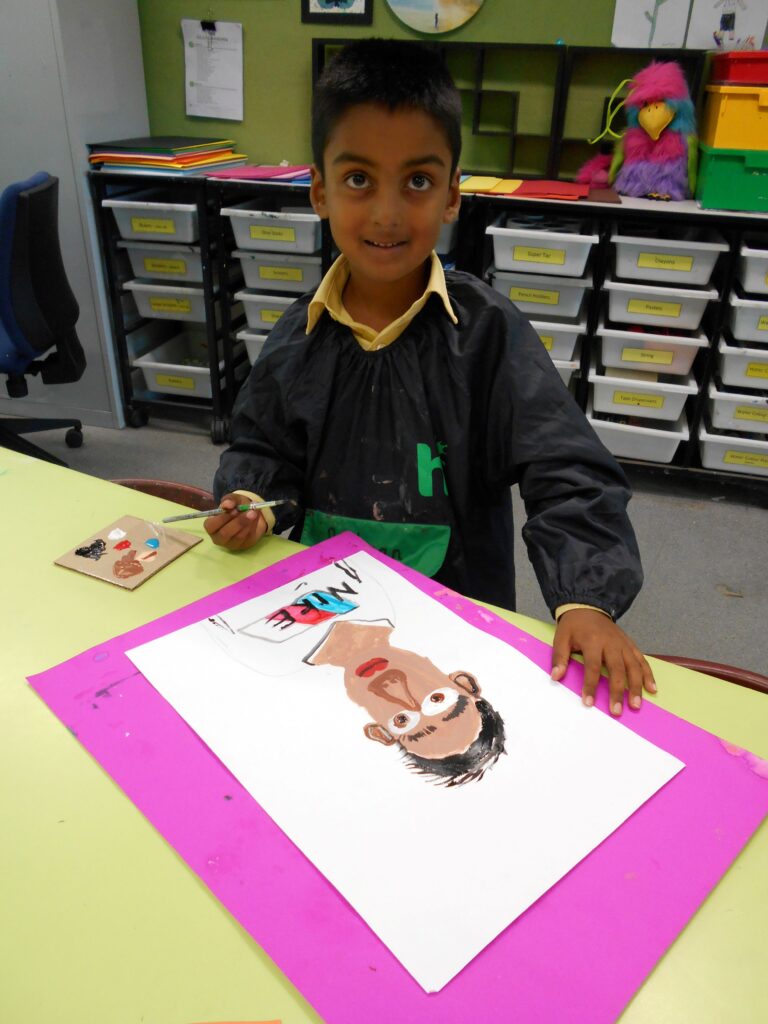
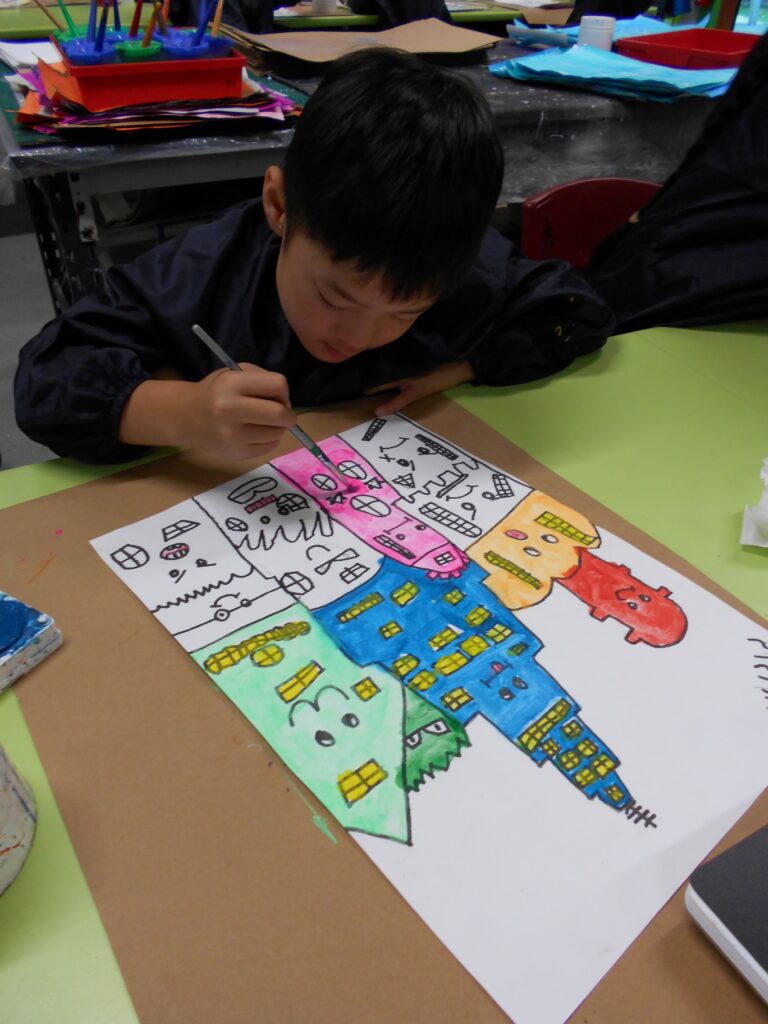
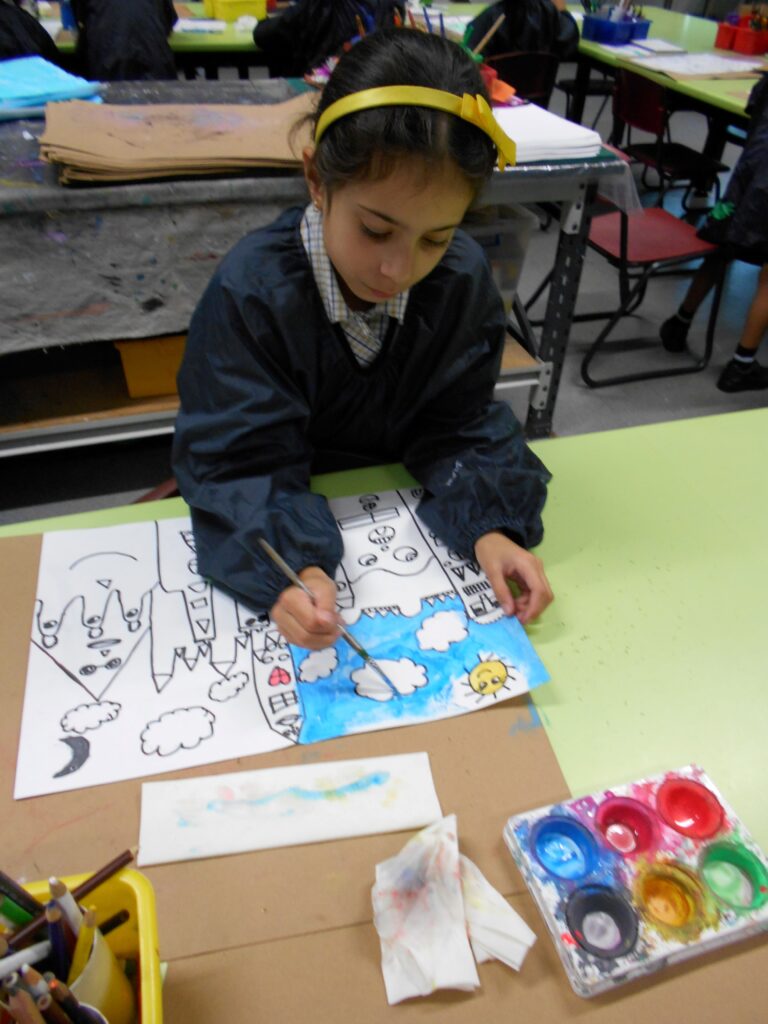
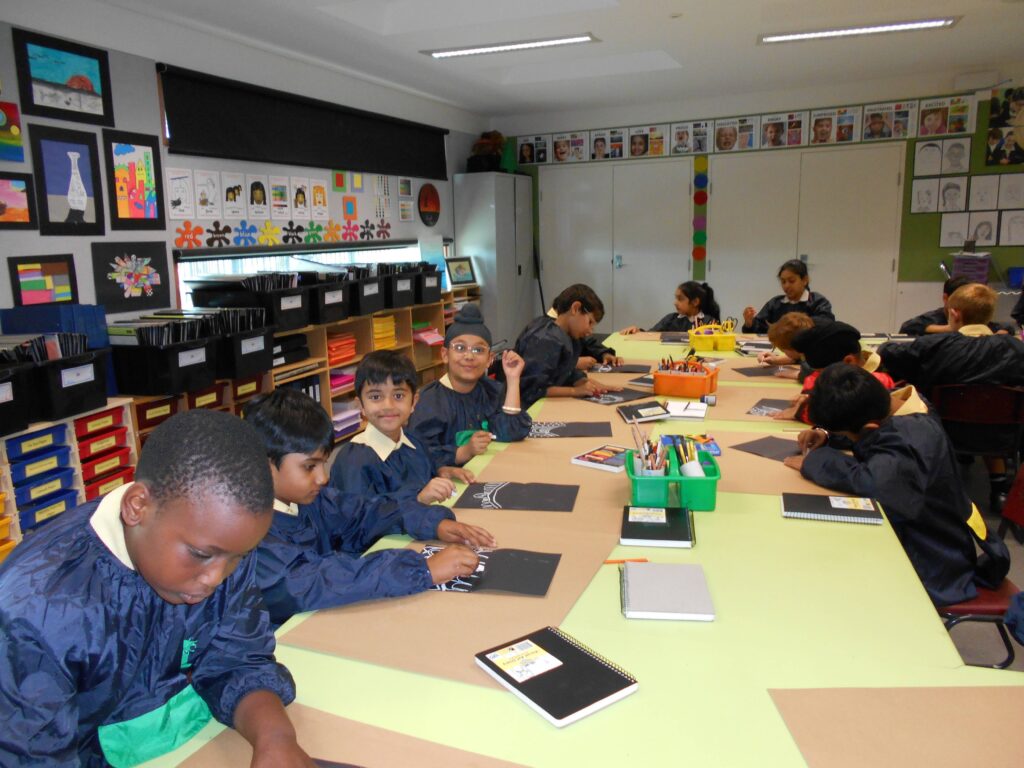
Throughout Term 1, students at the Maddingley campus have continued to explore the Elements of Art, with a greater focus on line, shape and texture through a variety of different drawing activities. They have been learning how to add extra detail to their drawings through a range of different methods such as using line and pattern to create implied texture in their images.
Prep Reception students have been experimenting with different ways that they can make lines and marks on their page and have used these different marks to create a self-portrait.
In Prep, students enjoyed reading the story ‘Giraffes can’t dance’ and creating their own artwork inspired by the story.
The Year 1 Students have been learning about the artist Paul Klee, engaging in discussions about many of his art pieces, including his continuous line drawings. The students then had lots of fun creating their own continuous line portraits.
Year 2 students have been drawing cityscapes. They have begun creating collagraphs and scratch foam cities ready to create beautiful prints.
In Year 3 students enjoyed learning about and discussing the different sections of a landscape. They created their own abstract landscapes, using line and pattern to create implied texture in their work.
The Year 4 students have created sea salt turtles, patterning the turtle shells and sprinkling salt over ink to create the effect of texture and movement in the ocean surrounding their turtle.
Junior School Art Team- Maddingley
Year 2 at Maddingley
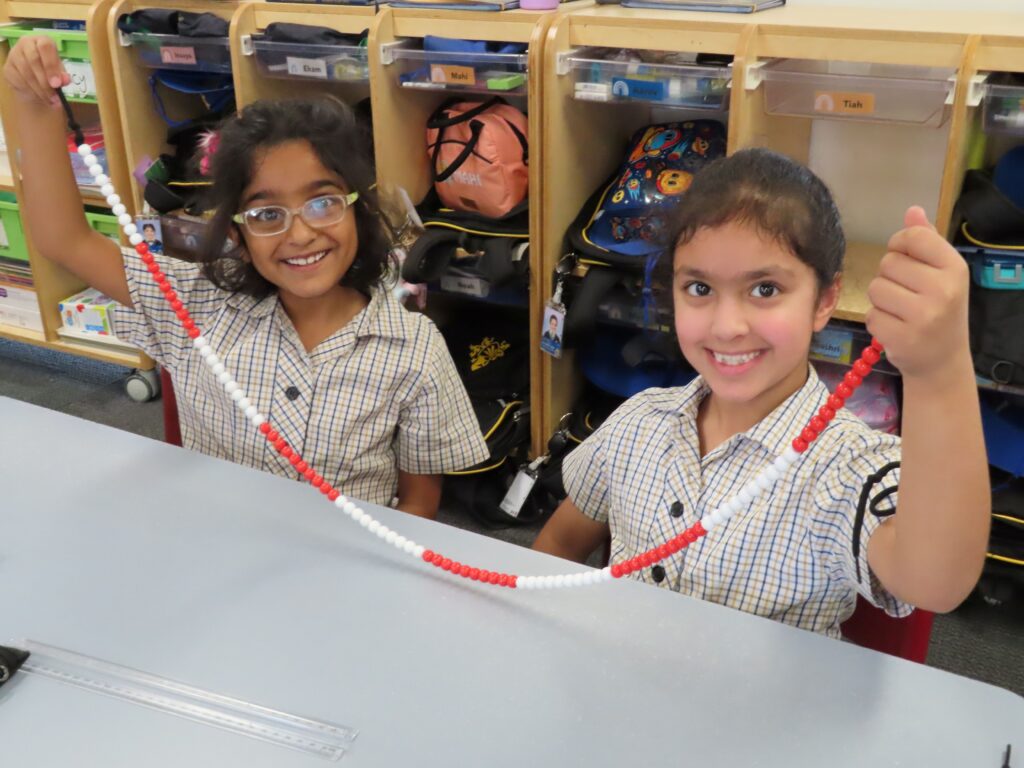
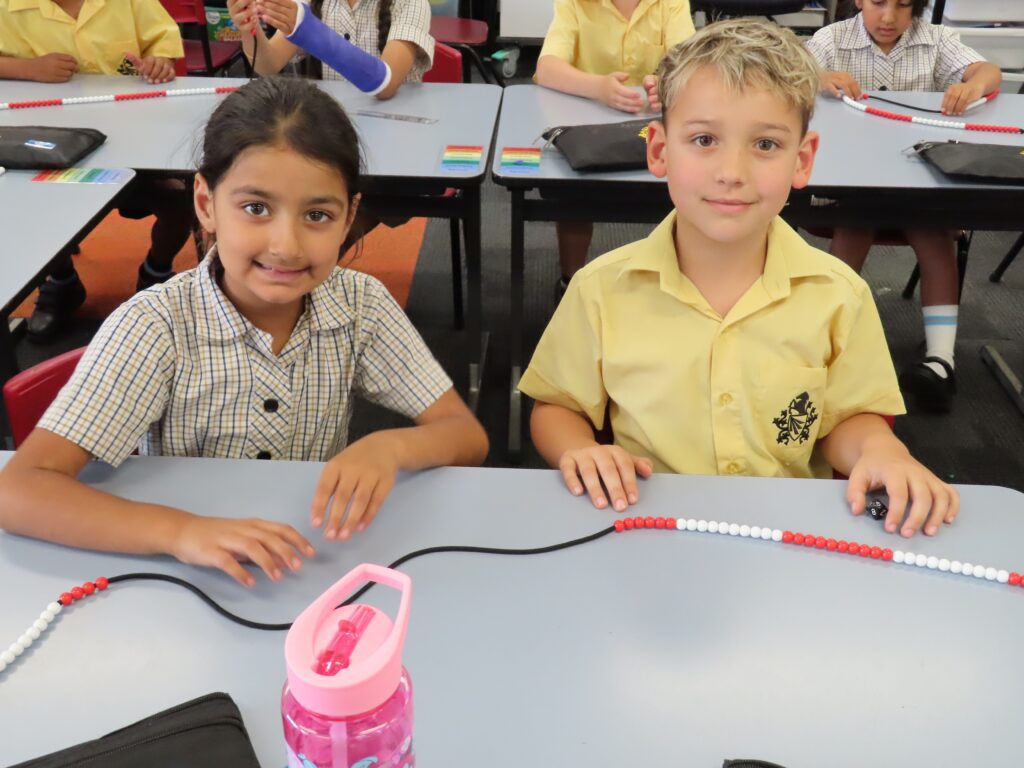
This term, our Year 2 students explored the world of counting and patterns, learning everything from skip counting to identifying number sequences. Through engaging activities and challenges, they are developing strong mathematical skills while having fun working with shapes, colours and numbers. Students have participated in a range of hands-on activities such as using bead strings to assist with counting and recognising number patterns.
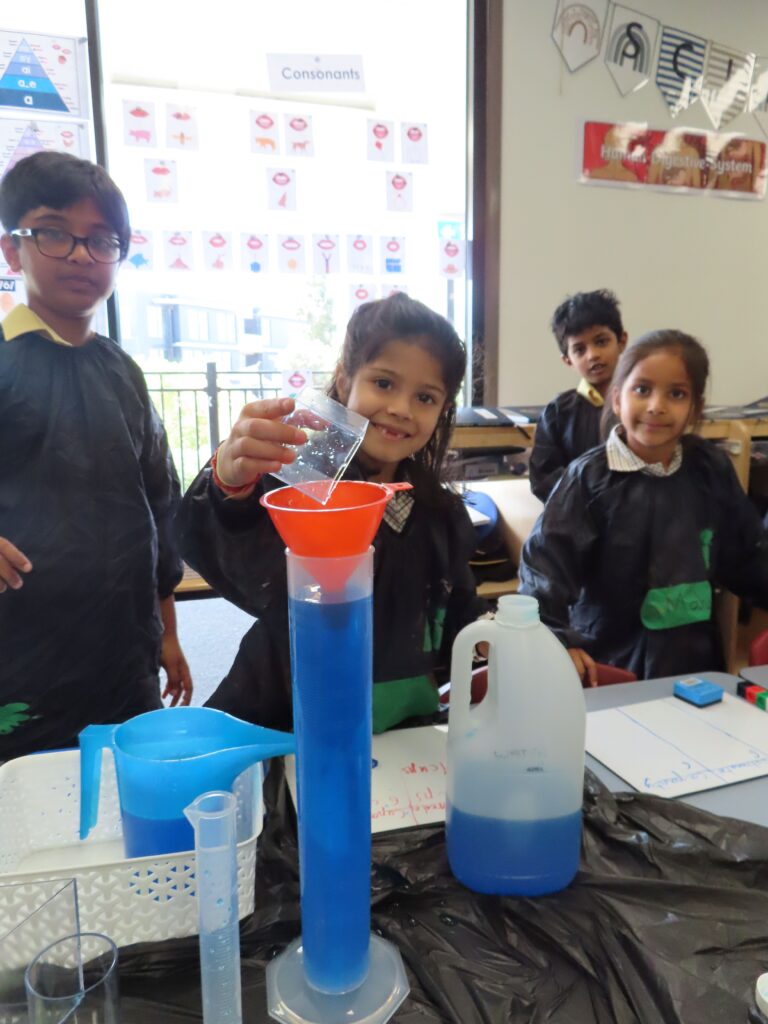
Alongside this unit, the students have been exploring the concepts of mass, capacity and volume through practical, hands-on learning experiences. Using coloured water, measuring containers and a variety of classroom materials, students have investigated how different amounts can be compared and measured. These interactive activities have helped them develop a deeper understanding of how we measure and describe the space things take up and how much they can hold.
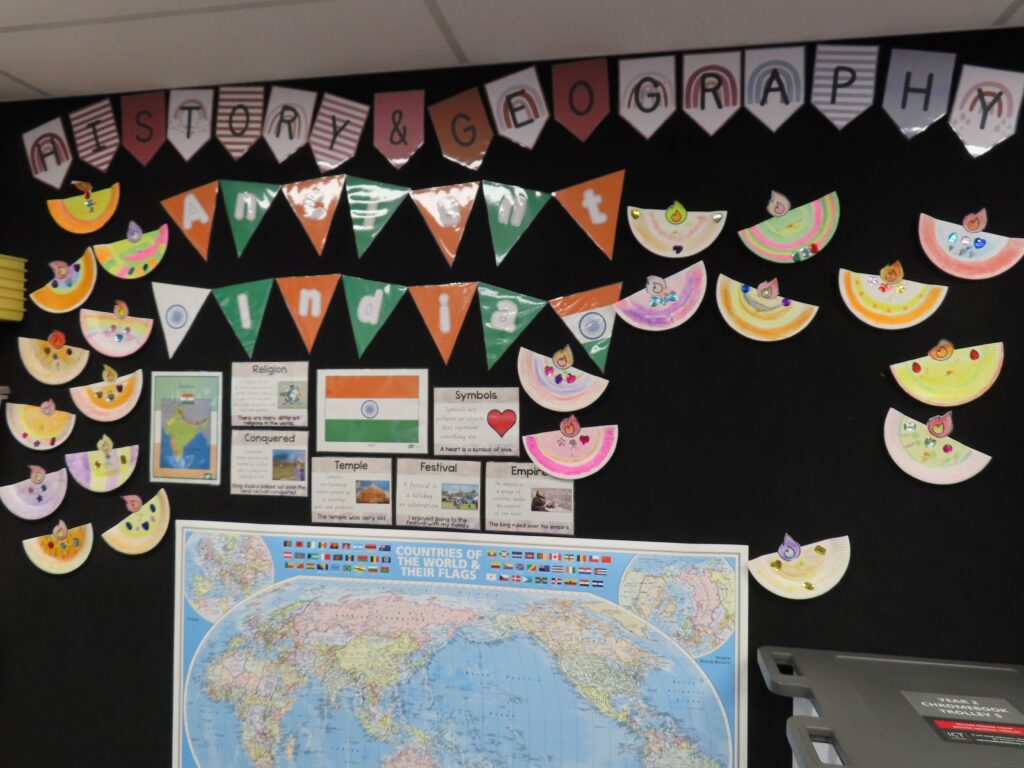
In History & Geography, students explored Ancient India, learning about the Indus Valley civilisation, the Ganges and Indus Rivers and the culture and beliefs of the time. They were introduced to Hinduism and Buddhism, including the teachings of the Buddha and the leadership of King Asoka. Students also explored a traditional Jataka Tale, helping them understand important values such as kindness, generosity and compassion. They learned about Diwali, the Festival of Lights. Through this unit, students began to understand how Ancient India has influenced cultures around the world, including Australia today.
It has been an exciting term so far, filled with learning, exploration and creativity. We can’t wait to see what our Year 2 students will achieve next!
Maddingley Year 2 Team
Junior School Science
Year 1:
The focus for the beginning of Term 1 in Year 1 Science has been:
• Classroom routines and expected behaviour in Science
• Expectations and requirements when participating in experiments inside and outside of the classroom
• Participation in class discussions
• BMG Values instilled in lessons:
• Respect, Discipline, Confidence, Kindness, Ambition, Leadership
This term, students have been investigating the Earth and how it tilts and rotates on an axis. They have explored how it takes twenty-four hours for the Earth to do a full rotation, and it takes an entire year to complete a full revolution. Students have used their knowledge of the Earth’s tilt to gain an understanding of how this impacts seasons. They have been able to explore the four Australian seasons and then looked at the seven corresponding Aboriginal and Torres Strait Islander Seasons.
Year 2 Science:
This term, Year 2 students have explored how the body uses energy from food, beginning with Winnie the Pooh and his “grumbly belly”. They then followed Jason on a hiking adventure to understand the importance of regular nutrition for energy and growth. They are now investigating the digestive system through hands-on activities, learning how food moves through the body, how nutrients support growth and repair and how waste is removed. The term will then conclude with a focus on building a balanced, healthy diet.
Year 3 Science:
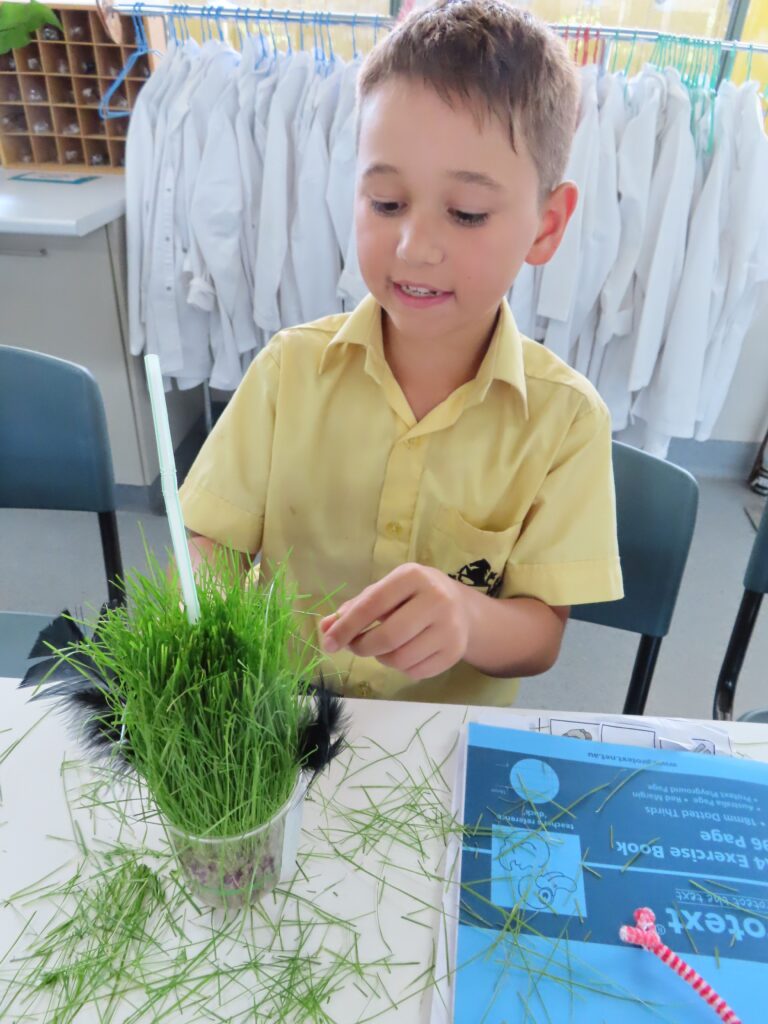
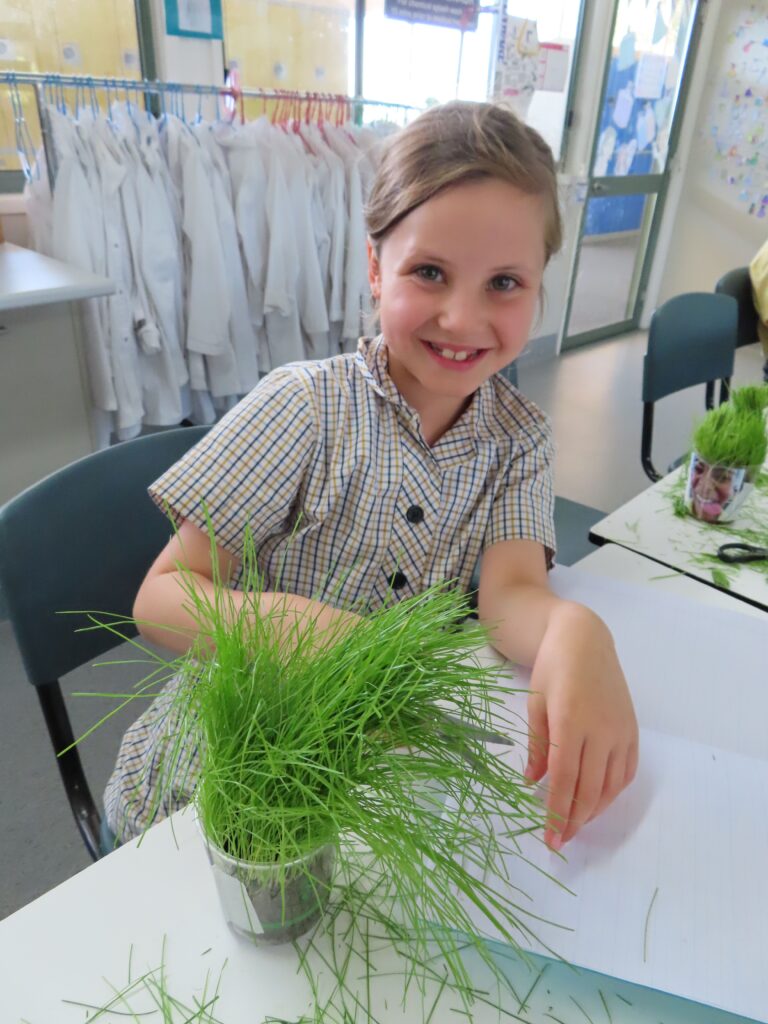
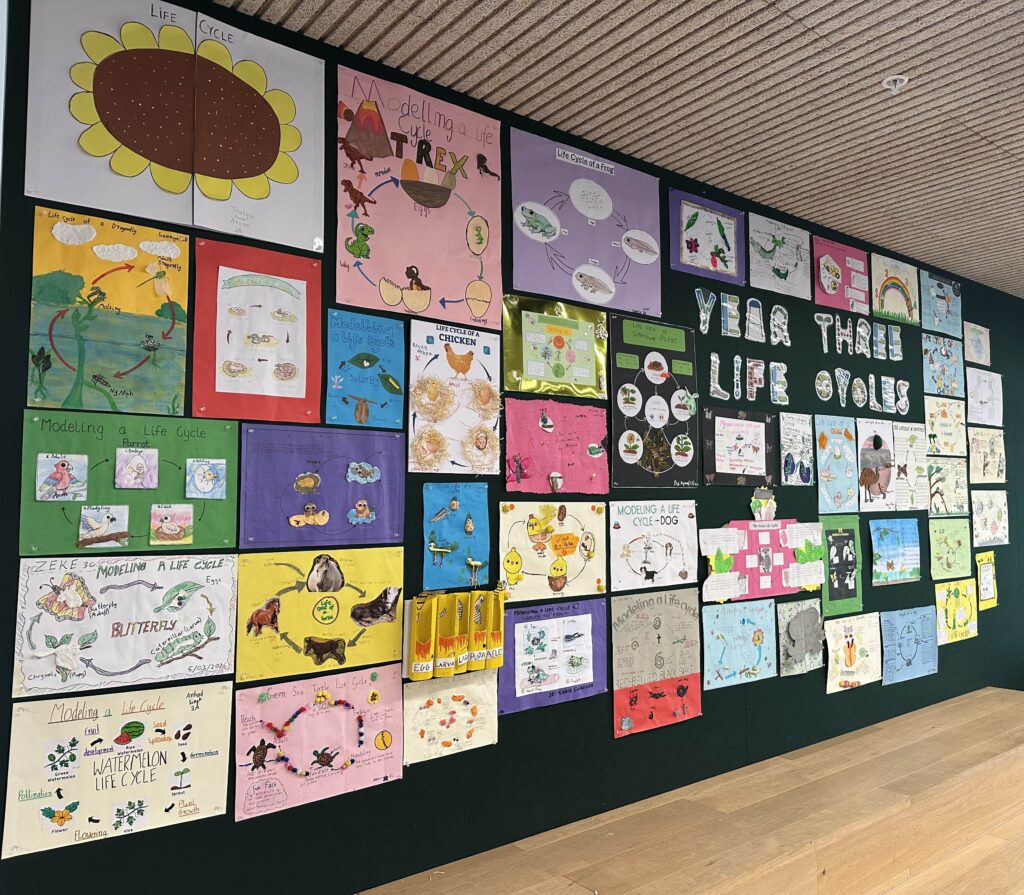
Maddingley Year 3 students have been learning about safe laboratory practices to support an effective learning environment, all before beginning their Biological Sciences unit on life cycles, traits and variation. They have explored how animals reproduce (live birth, eggs and metamorphosis) and how plants reproduce through flowers, seeds and spores while creating labelled diagrams and scientific drawings to show stages of growth and development. Students will also research a chosen plant or animal and build a life cycle model, before investigating how traits are inherited and how individuals within a species can be similar yet different. The unit will finish with with a fun experiment, exploring how environmental factors such as light and water affect growth by using Grassheads to observe changes firsthand.
Year 4 Science:
This term, Year 4 students have explored the topic Structure and Function of Living Things, beginning with lab safety and earning their Lab Licences before investigating the structure of celery by using microscopes. They then conducted a hands-on experiment to explore how celery petioles transport water, recording observations and applying the scientific method. Students have also begun learning about the structure and function of the visual and auditory systems, understanding how these help keep us safe. At the end of Term 1, students will participate in an assessment and a celebration of their learning.
Don’t forget to look at the Schoolbox Family Engagement Page for more Junior School news.
Junior School Science Teachers (Maddingley)
Woodlea
Year 3 Highlight
Our Year 3 students had been working hard as they prepared for their first NAPLAN. Over the past weeks, they have been engaging in activities designed to strengthen their reading, writing and numeracy skills, along with building confidence and familiarity with the types of questions they will encounter.
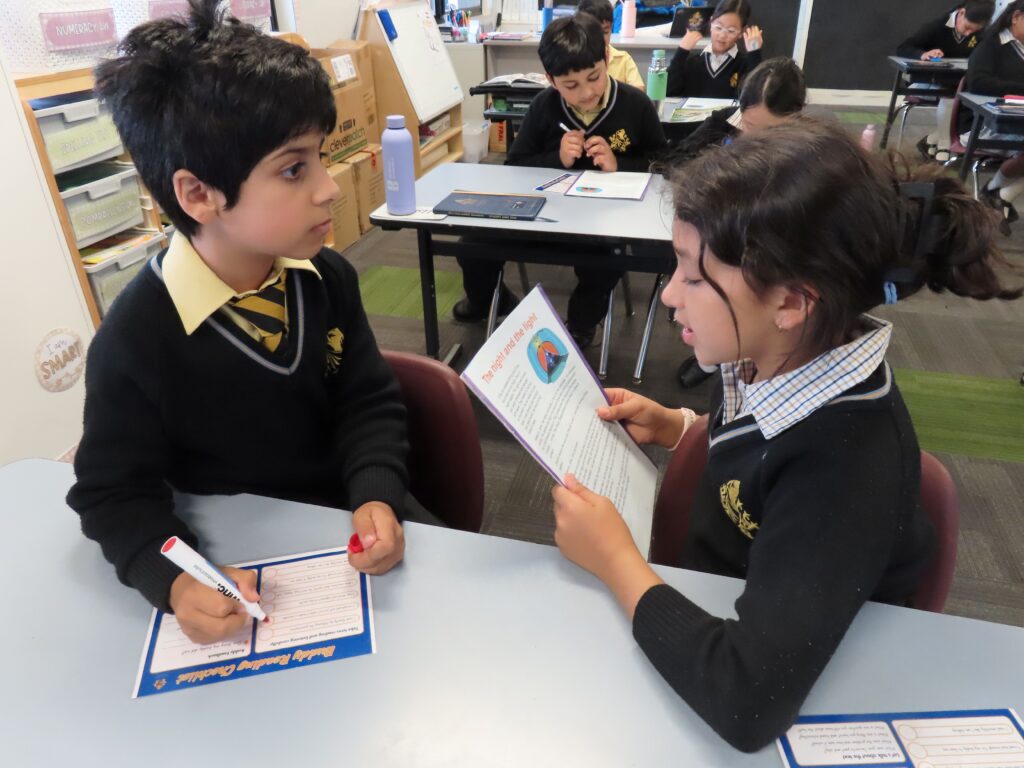
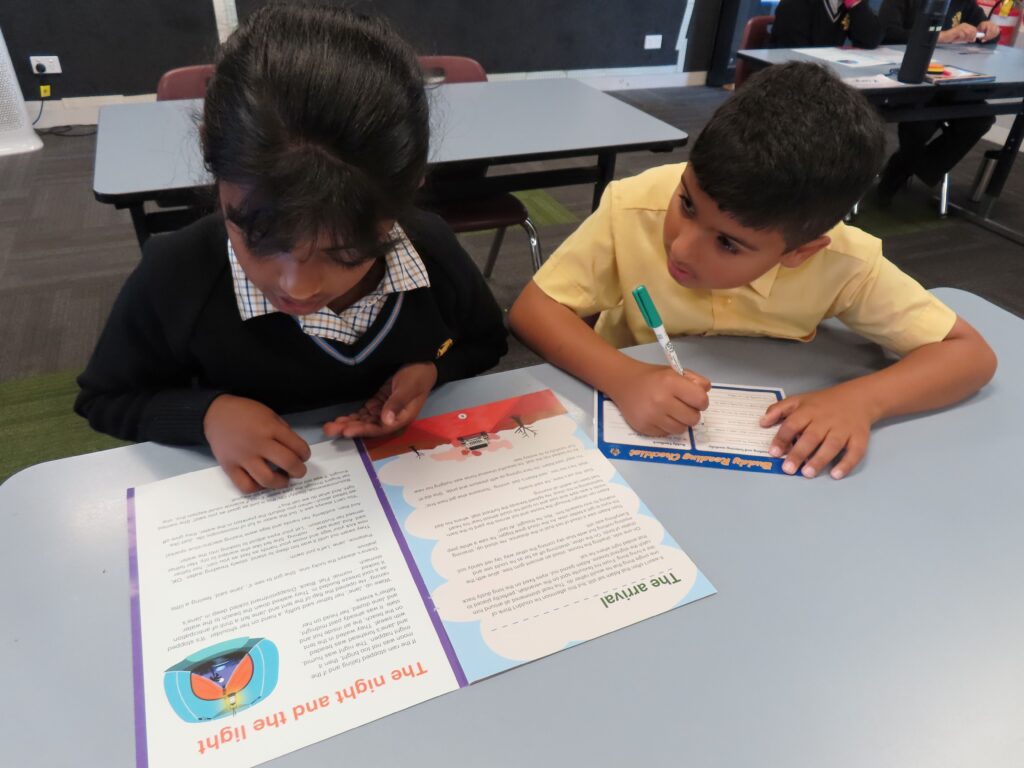
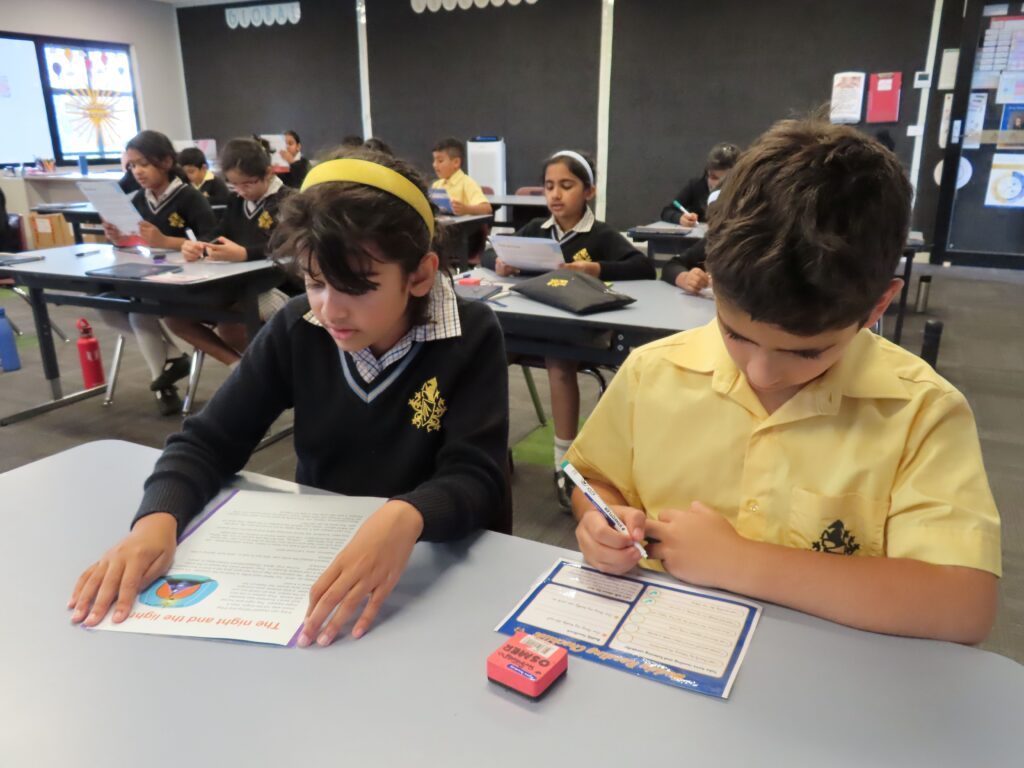
Another key highlight in our classrooms has been paired reading, where students read aloud to a partner and take turns listening and sharing feedback. This activity not only helps to improve fluency and expression, but also encourages students to give and receive constructive feedback in a supportive way. By discussing what went well and suggesting ways to improve, students are developing their critical thinking, communication skills, and a deeper awareness of how to become confident, accurate readers.
Year 3 Teachers
Woodlea Junior School Science
Year 3 Science – Metamorphosis Masters
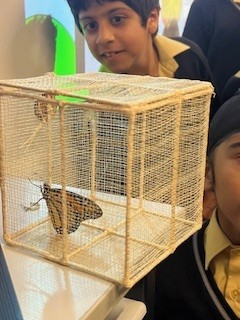
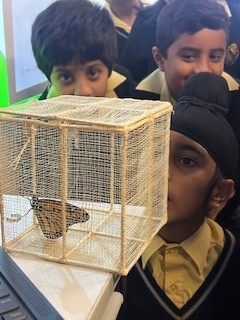
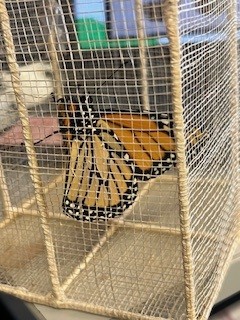
Year 3 students have been enthusiastically exploring the fascinating world of living things and their characteristics, with a special focus on life cycles. Through hands-on learning and careful observation, students discovered how living things grow and change over time. A highlight of the unit was the incredible moment when the class watched a butterfly emerge from its chrysalis. Students observed the process with great excitement, discussing the stages of the butterfly life cycle and recording their observations like young scientists. Though it was bittersweet, releasing a butterfly we nurtured was the highlight of our term.
In addition to studying insects, students also investigated plant life cycles by growing their own bean plants. Over several days, they watched closely as tiny shoots pushed through the seed casing, and with an exciting wait on when leaves will begin to form. This real-life experience is helping students understand how plants grow and what they need to survive. These engaging activities allowed students to connect scientific ideas with real-world examples, sparking curiosity and a deeper appreciation for the living world around them.
Year 4 Science – Nature’s Recyclers: Spotlighting the Decomposers
Year 4 students have been exploring the important roles that producers, consumers and decomposers play within food chains, developing their understanding of how energy moves through living systems. As part of their investigations, students examined how decomposers break down organic matter and recycle nutrients back into the environment. Through class discussions and hands-on activities, students built their understanding of how different organisms depend on one another for survival and how these relationships help maintain healthy ecosystems. Students have learned about specific food chains related to ‘grassland’ ecosystems, reflective of the area in which the Woodlea campus is nestled in.
A highlight of the unit was a long-term investigation in which students observed how different types of food decomposed under a range of conditions, including varying temperatures, levels of air exposure and comparisons between fresh and dehydrated foods. Students recorded changes over time and discussed how environmental factors can influence the rate of decomposition. This inquiry-based experiment allowed students to think and work like scientists, making observations, identifying patterns and drawing conclusions about how decomposers contribute to the cycling of matter in ecosystem.
Lisa Crossley – Teacher